Pennsylvania announces strict guidelines for non-healthcare essential workers

Pennsylvania Governor Tom Wolf has announced a new Order related to the ongoing COVID-19 outbreak. Signed by Dr. Rachel Levine under her authority as Secretary of the Department of Health, the April 15, 2020, Order is designed to provide additional protections for employees of essential businesses who are working during the pandemic — along with the public with whom they come into contact.


The order contains a long list of new requirements for essential employers who are not healthcare providers and is designed to help employees maintain social distancing at work. Read more here.

Connex Releases 2019 Retail Facilities Maintenance Industry Overview Benchmarking Report

Connex, formerly PRSM, the authority on Retail and Multisite Facilities Management, is excited to announce the 2019 Retail Facilities Maintenance Industry Overview Benchmarking Report. This report contains more data than ever before including 150+ charts in five different areas – Demographics, Organizational Structure, Multi-Site Organizations’ Budgets & Expenses, Supplier Management and Sustainability.” data-reactid=”13″ style=”color: rgb(38, 40, 42); margin-bottom: 1em;”>Connex is excited to announce the 2019 Retail Facilities Maintenance Industry Overview Benchmarking Report. This report contains more data than ever before including 150+ charts in five different areas – Demographics, Organizational Structure, Multi-Site Organizations’ Budgets & Expenses, Supplier Management and Sustainability.

Connex, formerly PRSM, the authority on Retail and Multisite Facilities Management, is excited to announce the 2019 Retail Facilities Maintenance Industry Overview Benchmarking Report. This report contains more data than ever before including 150+ charts in five different areas – Demographics, Organizational Structure, Multi-Site Organizations’ Budgets & Expenses, Supplier Management and Sustainability.” data-reactid=”13″ style=”color: rgb(38, 40, 42); margin-bottom: 1em;”> 

The 2019 Retail Facilities Maintenance Industry Overview features new data on staffing, use of technology, budget forecasting and recycling programs. Additionally, this one-of-a-kind report highlights Connex Resources – Online Education Courses, Tools, Templates and White Papers – to assist facility managers in putting data into action.

Bill Yanek, Connex, CEO. “This new edition is a comprehensive resource showcasing the current state of the Facilities Management industry and shares education and resources to make efficient and effective business decisions.”

To illustrate the value of the 2019 Industry Overview, Connex created a Benchmarking Snapshot to share a glimpse into some of the available data. The Snapshot includes the industry average of the percentage of preventive versus corrective actions, number of full-time staff, lease agreements as well as Repair & Maintenance, Capital Expenditures and Remodel/Reimage budgets.

The 2019 Industry Overview was created using FY2018 data collected from the responses provided in the Retail Facilities Maintenance Industry Overview Benchmarking Survey. The Report includes the average aggregate data from 21% of the association’s Multi-Site FM membership segment. A variety of different store types are represented – including, but not limited to, apparel, banking/financial services, chain drug store/pharmacy, convenience store/gas station, discount store, grocery store/supermarket and medical/dental. Additionally, the snapshot features average aggregate data from 15% of the association’s Supplier membership segment.

The 2019 Retail Facilities Maintenance Industry Overview is available for purchase here.

Pennsylvania issues order mandating cleaning safety measures

The State of Pennsylvania has issued an order mandating cleaning safety measures in all buildings of at least 50,000 square feet.


This order covers commercial, industrial or other enterprises, including but not limited to facilities for warehousing, manufacturing, commercial offices, airports, grocery stores, universities, colleges, government, hotels, and residential buildings with at least 50 units, shall implement the following cleaning protocols


(1) in addition to maintaining pre-existing cleaning protocols established in the facility, as specified in paragraph (2) below, clean and disinfect high-touch areas routinely in accordance with CDC guidelines, in spaces that are accessible to customers, tenants, or other individuals;


(2) maintain pre-existing cleaning protocols established in the facility for all other areas of the building;


(3) ensure that the facility has a sufficient number of employees to perform the above protocols effectively and in a manner that ensures the safety of occupants and employees;


(4) ensure that the facility has a sufficient number of security employees to control access, maintain order, and enforce social distancing of at least 6 feet, provided the security employees are otherwise responsible for such enforcement.

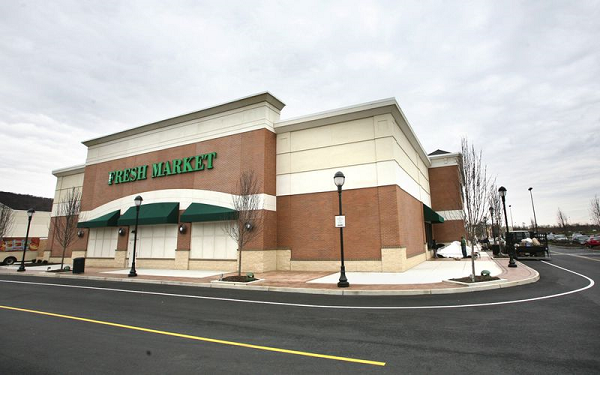
Fresh Market first grocery chain to require shoppers to wear masks

The specialty grocery retailer is the first in the country to make such a requirement. Fresh Market also temporarily changed its hours to 8 a.m. to 9 p.m. daily. On weekdays, the first shopping hour of 8-9 a.m. is reserved for seniors and other individuals most at risk as identified by the CDC. Read more here.

U.S. Department of Commerce Announces Affirmative Preliminary Circumvention Rulings on Exports of Hydrofluorocarbon Blends From China

Today, the U.S. Department of Commerce announced an affirmative preliminary antidumping duty (AD) circumvention ruling involving exports of hydrofluorocarbon (HFC) blends from China (R-404A, R-407A, R-407C, R-410A, R-507A) that are processed in India using both Chinese and Indian components, and then exported to the United States, circumventing the existing AD order on imports of HFC blends from China. Commerce also announced an affirmative preliminary AD circumvention ruling involving exports of HFC components from China (R-32, R-125, R-143a) for further processing in the United States that are circumventing the existing AD order on imports of HFC blends from China.

Accordingly, Commerce will instruct U.S. Customs and Border Protection (CBP) to suspend liquidation and to require a cash deposit of estimated duties on unliquidated entries of HFC blends from India which contain components from China, and on unliquidated entries of HFC components R-32, R-125, and R-143a from China.

The applicable cash deposit rate for HFC blends from India blended with Chinese HFC components will be 216.37 percent. For HFC components from China, Commerce will instruct CBP to collect cash deposits in accordance with those rates prevailing at the time of entry, depending upon the exporter in question. These rates will apply to any future imports and unliquidated entries since June 18, 2019 (the date which Commerce initiated these circumvention inquiries).
These inquiries were initiated in response to allegations of circumvention from the American HFC Coalition.

U.S. law provides that Commerce may find circumvention of AD or countervailing duty orders when merchandise subject to an existing order is completed or assembled in a third country or the United States from parts and components imported from the country subject to the order, pursuant to section 781 of the Tariff Act of 1930, as amended.

The strict enforcement of U.S. trade law is a primary focus of the Trump administration. To date, the Trump administration has issued 48 preliminary or final affirmative determinations in anti-circumvention inquiries – this is a 200 percent increase from the number of such determinations made during the comparable period in the previous administration.

The U.S. Department of Commerce’s Enforcement and Compliance unit within the International Trade Administration is responsible for vigorously enforcing U.S. trade rules and does so through an impartial, transparent process that abides by international rules and is based on factual evidence provided on the record.

How COVID-19 is impacting consumer behavior

COVID-19 has created a seismic shift in consumer behavior that will forever impact retail and customer expectations. As consumers experience product shortages and fear of being in public places they are adapting to a new normal that will require retailers to adapt to survive. 


A survey as of April 7 shows 92% of consumers said their shopping behavior had been impacted by Coronavirus. 40% said stores they would otherwise go to are closed. 15% of those who placed an online ship-to-home order in the past month indicated it was their first time ever or first time in the past six months doing so. 37% of click-and-collect users were new or ‘new lately.’   


The majority said they are no longer sure if they’ll travel in 2020, that they cancelled a trip, or that they’re no longer comfortable traveling to certain regions. Read more here.

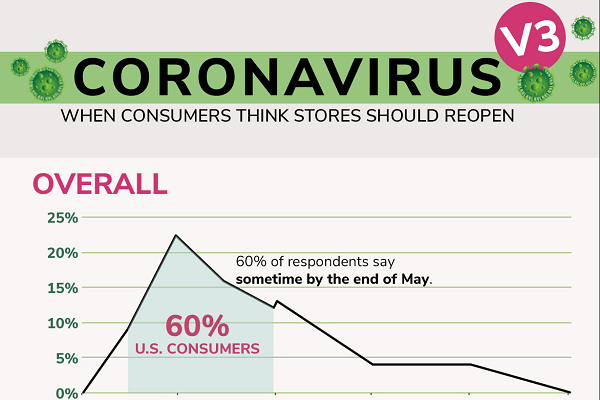
Infographic – When consumers think stores should reopen

Store closures and furloughs due to coronavirus have struck the retail industry and world economy in an unprecedented way. But, could the worst be behind us? Many experts believe the U.S. COVID-19 outbreak is beginning to show signs of peaking in various hotspots across the country.


We asked U.S. consumers on April 3, 2020, “When do you think stores should reopen?” and gathered data from across the country ensuring representation from both hotspots and non-hotspots, genders, and generations.


Our recent consumer study finds growing optimism among people living in Coronavirus hotspots, men and Millennials. An overall majority (60%) of consumers in the U.S. feel that stores should reopen by the end of May, 2020. See the infographic here.

Federal Heath converts manufacturing to support medical teams

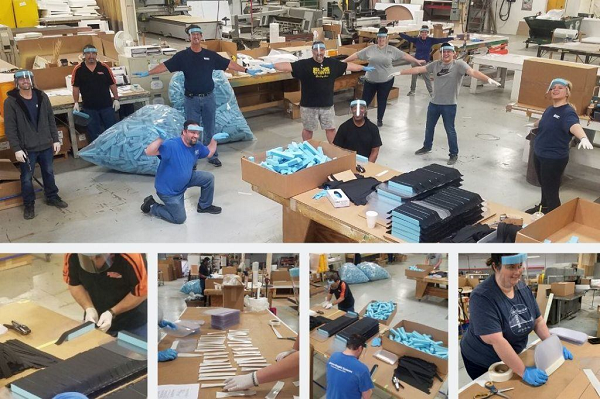
In response to the COVID-19 outbreak, Federal Heath has announced the conversion of manufacturing capacity in order to build protective equipment for the medical industry.

“We understand the sacrifices and heroic efforts our doctors, nurses, medical staff and first responders are making in order to keep us safe,” said President and CEO Sid Rasnick. “We have teamed up with a health partner to manufacture and supply protective face shields in record time to the medical industry.”

The goal is to die-cut, assemble and ship 10,000 or more clear PETG masks per week for the next five weeks. Federal Heath will supply the manufacturing labor, the material by a vendor, and another partner will deliver units to places where they are needed most.

“Like most businesses and manufacturing facilities affected by the Covid-19 outbreak, Federal Heath understands the hardships our employees, valued customers and millions of people across the country are facing,” Rasnick said. “To that end, we at Federal Heath want to do our part to support the brave men and women on the frontline of this battle. We are proud of our employees who have volunteered for this project. We understand that we are all in this together and we will do whatever we can to help. ”Federal Heath will continue to practice and follow strict social distancing guidelines as put forth by the CDC, joining in nationwide efforts to protect both our employees and the public.”

Connex supplier ramps up production to include face shields

When COVID-19 struck, North American Signs quickly identified a need to begin making life saving face shields and barriers for use by medical personnel and others.


“We wanted to do our part to help prevent the spread of Covid-19. So, when we saw a need arise within essential businesses, we sprung into action,” said John Yarger, North American Signs President and CEO.


“Transparent physical barriers for medical, office, retail, and other settings allow people to be in closer proximity and reduces the risk of infection. I believe we can play an important role in both protecting people and aiding the resumption of more normal business conduct.  Helping our country be successful provides a strong motivating force for our employees,” Yarger said. 


The shields help prevent the spread of any droplet-based contagions in grocery stores, at bank teller windows, for healthcare workers in hospitals, and any place where workers come into contact with customers or patients.


Essential workers are the heartbeat of our country—from grocery store clerks, to police officers and firefighters, to healthcare personnel and facilities management. They keep America running. “Because of their daily sacrifice, Safety Shield (a subsidiary of North American Signs) is committed to protecting the health and safety of all people, so that you, your friends, family, and our essential workers can keep running,” Yarger concluded.

CoolSys provides sneeze guard installation services at grocery and retail check-out counters to help prevent COVID-19 transmission

As the need for protection against COVID-19 transmission remains critical across the United States, CoolSys™, a parent of market-leading refrigeration and HVAC services companies nationwide, is providing installation of plexi-glass protective panels, known as sneeze guards, at check-out counters in grocery, restaurant and other essential retail stores.  


“During this challenging time, we are doing whatever we can to respond to the needs of our customers to prevent transmission of COVID-19,” comments Adam Coffey, CEO at CoolSys.  “By installing sneeze guard plexi-glass panels at the point of purchase, retail stores can add another layer of safety and peace of mind for customers and employees.”


While sneeze guards are already commonly used in grocery and food-service locations at self-serve food bars and other areas that require a protective barrier, their installation at check-out counters represents a new measure in the effort to contain and prevent COVID-19 transmission.  They can help customers and employees maintain social distance and physical separation while protecting from splashes and sprays.  CoolSys and its family of companies has already installed sneeze guards at multiple locations of leading  grocery-chains  and is expanding these services nationwide to meet growing demand. 


“We are happy that our field crews are able to use their skills and experience to install sneeze guards at some of our most important customers’ locations to help keep their employees and their customers safer during this global crisis,”said Joe Roomsburg, general manager and former owner of Virginia-based BRR Refrigeration, a CoolSys company.


About CoolSys 

CoolSys is the market-leading refrigeration and HVAC services company, with more than 100 mechanical, electrical, plumbing and refrigeration (MEPR) engineers and 1,850 field-based technicians specializing in every stage of mission-critical systems from engineering and design, to installation, service and maintenance, and energy optimization. Headquartered in Southern California, CoolSys offers a full suite of services covering the daily needs of more than 40,000 customer locations across North America spanning a range of industries from healthcare, telecom, pharmaceutical, grocery, retail, commercial and industrial cold storage. For additional information, please visit www.coolsys.com.